

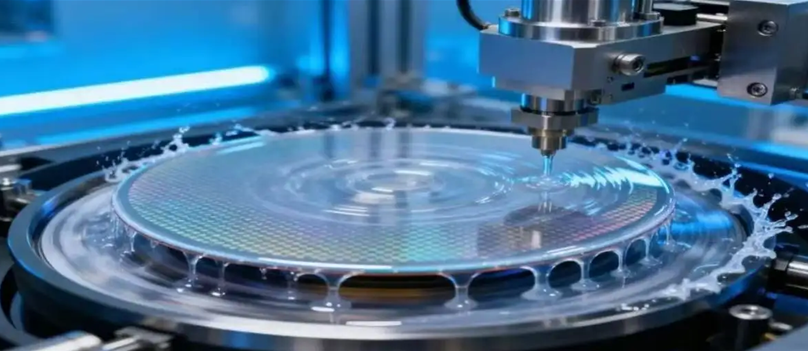
On the litho floor, a half-degree drift during TARC/BARC bake is enough to shove critical dimensions and plant defects that inspection catches way too late. What you need is heat that behaves like a fixed parameter, not another variable.
What matters, technically
We built these TARC/BARC baking heaters around short-wave infrared elements and a quartz-enhanced thermal design. The result is wafer-level uniformity within ±0.1°C across the bake surface. Temperature repeatability stays inside that same tolerance, cycle after cycle, so your soft bake and hard bake profiles don’t drift from the recipe. The hot zone is engineered for cleanroom Class 1–100 operation, using low outgassing materials and a particle-controlled path that keeps counts down where photoresist is most sensitive. The interface is specced to match standard coat/bake tracks—connectors, mechanical envelopes, the whole fit—so integration lands without reworking the tool.
Why this works in production
In production, that precision shows up directly as yield. TARC/BARC bake stability cuts reflectivity variation, suppresses standing-wave effects, and tightens sidewall profile control, which means less rework and scrap. You end up with more process headroom on critical layers and more predictable CD performance across the lot. Energy use drops too, thanks to fast ramp control and tight thermal coupling—bake time shortens without giving up uniformity. Reliability is built for 24/7 operation, with thermal cycling that doesn’t shift performance over thousands of wafers.
The things you need to know
These heaters need a stable power supply and a clean mounting interface. Even a small mechanical misalignment can create a local hot spot and wreck uniformity. Plan the install around track access and coolant flow, and verify the recipe set after the swap. Temperature setpoints that work on one platform can need an offset on another. Treat the bake profile as part of the lithography stack—not a standalone knob.