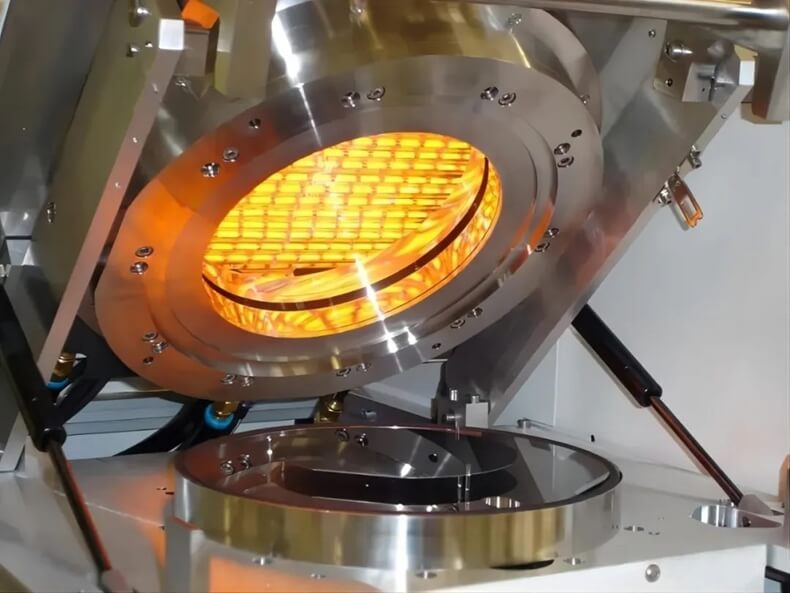
Out on the fab floor, the strip chamber sits idle until it hits temperature. If the support heater starts drifting, you get residue left behind—and the next coat doesn’t stick the way it should. You need thermal control that holds the setpoint, bake after bake, lot after lot. What actually matters under the hood We built the photoresist stripping support heater around short-wave infrared (SWIR) quartz emitters. They respond fast and let you keep a tight handle on the thermal budget. The unit lands ±0.1°C wafer-level uniformity, so your soft bake and hard bake profiles stay in spec across the whole cassette. It runs in cleanroom Class 1–100, and we verify zero particle generation with in-situ monitoring. In the field, it keeps going—24/7 reliability with units hitting 5,000+ hours and under 5% output drift. Specs cover 208–240 V input, a compact footprint that works for retrofits, and standard quartz-to-chamber interfaces. Why this matters where the process lives Photoresist stripping is fundamentally thermal. When the heater stabilizes quickly, you cut idle time between strips and you stop scrapping wafers from under-bake or over-bake. Tight uniformity keeps critical dimension control consistent after lithography, and it gives you repeatable strip endpoints—so you use less chemistry. The payoff is predictable cycle time, fewer rework lots, and real energy savings from shorter soak windows. What you need to watch on install Make sure the chamber flange matches and that emitter alignment is spot-on relative to the wafer path. SWIR heats fast, but that hot zone needs proper shielding so you don’t cook polymer seals. When you switch recipes, plan a short ramp-up calibration, and confirm cleanroom compatibility against your particle counting method. We send interface drawings up front to keep integration risk off the table.