

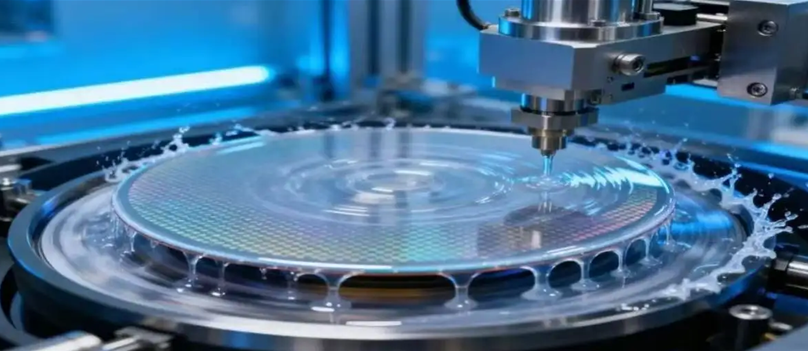
On the fab floor, the bake step is where you win yield—or you bleed it. A ±2°C swing during soft bake or hard bake will shift critical dimensions and start pushing scumming. A cold spot across the wafer shows up as footing and line-edge roughness. The 2026 best-selling wafer heater was built to take that variability out of the thermal budget. What matters, technically, is control. We run short-wave halogen lamps in a quartz-halogen envelope, and we use closed-loop pyrometry to hold wafer-level uniformity at ±0.1°C across 150–300 mm substrates. Temperature ramps repeat within 0.2°C from batch to batch, and soak stability keeps the photoresist profile where it needs to be. The heater body is built for cleanroom Class 1–100. We use low-outgassing materials and keep the airflow path particle-controlled. Zero particle generation isn’t a tagline—it’s something we verify with in-line particle counters during qualification. Why it works in lithography clusters is simple: it keeps photoresist processing in spec, so you cut rework and improve line yield. In multi-shift qualifications, the system runs 24/7 with zero unplanned downtime, and thermal profile repeatability shortens qualification cycles. Energy draw is optimized, and the footprint drops into standard tracks without rework. The payoff is stable critical dimension control, less scrap, and capacity you can plan around. A couple of practical notes. Installation needs a dedicated power circuit and verified exhaust routing. The lamp array throws intense radiant heat, so shielding and interlocks have to be handled exactly per the machine manual. The heater is compatible with SECS/GEM for data capture, but full recipe integration depends on your host controller version. Run a short integration test before you roll it out on line.