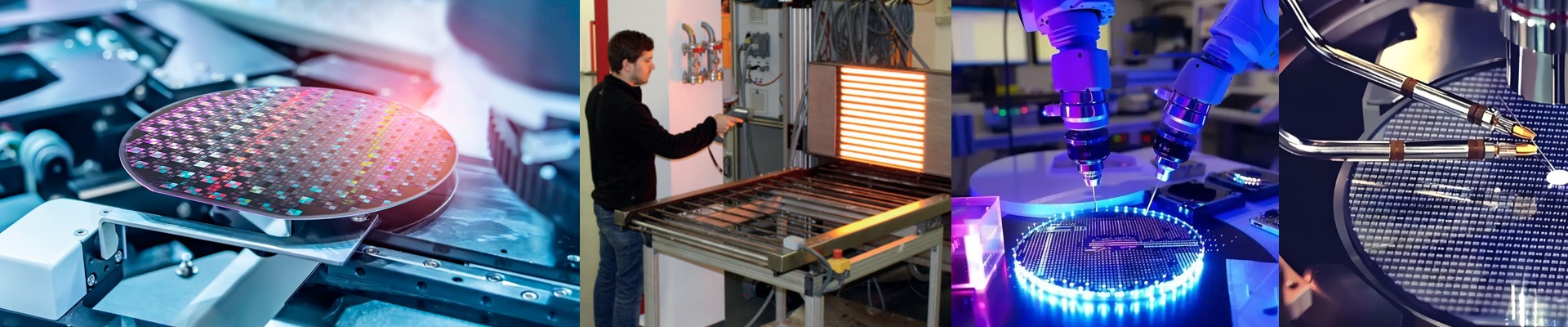
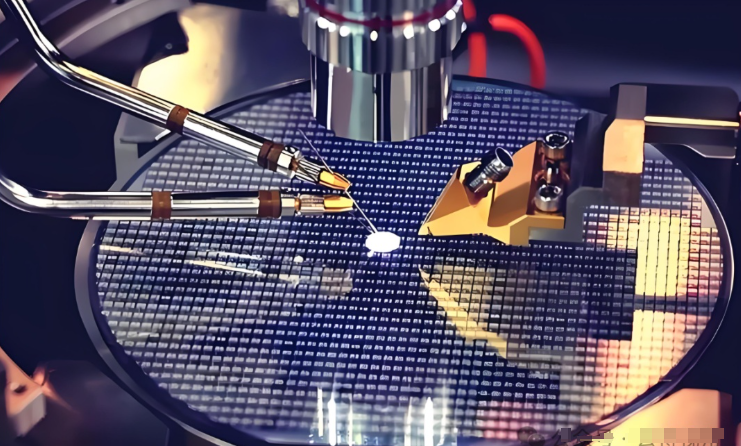
On the litho floor, the bake isn’t just a temperature step—it’s a dimensional promise. Let a hotplate drift by 0.5°C and your critical dimension control goes sideways. Repeatability turns into a crapshoot. TEL heater lamps are there to take that uncertainty out of the thermal budget. What matters under the hood We spec short-wave infrared (SWIR) quartz-halogen emitters matched to TEL thermal modules. The payoff is a fast ramp with low thermal inertia. Across the bake surface, wafer-level uniformity holds ±0.1°C, so soft bake and hard bake profiles stay in spec, shot after shot. The assembly is cleanroom-compatible from Class 1 to Class 100. Materials and joints are chosen to keep outgassing and particle generation off your maps. When we talk output stability, we measure it against time and cycles—not marketing. Why it plays in photoresist Heat is geometry in photoresist processing. TEL heater lamps steady the bake window, cutting down CD excursions and scum defects that come from under-cure or over-cure. Tighter temperature control tightens the process window and shortens qualification runs, improving yield without touching the chemistry. You also get real-world uptime. The lamp hits setpoint fast and holds it without overshoot, so energy use drops. And the long service life keeps PM interruptions off the schedule. What you need to get right Installation demands exact mechanical and electrical alignment to the host tool. Output is sensitive to lamp orientation and cooling-air flow, so run the airflow routing exactly as specified. Treat the lamp as a calibrated instrument, not a consumable. Plan calibrations at defined power-on hours to keep that ±0.1°C uniformity intact.