



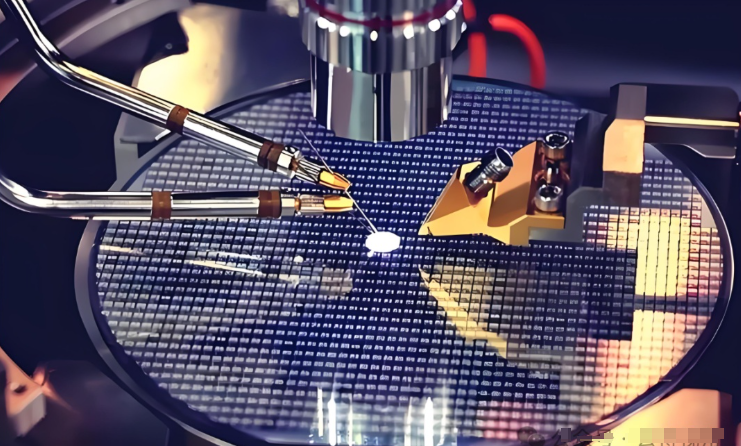
Why We Stress-Test Every Single Wafer IR Sensor
When you’re building IR sensors for wafer fab, there’s no such thing as “close enough.” An electrical arc or a tiny insulation leak isn’t just a technical glitch. It’s a nightmare. It can wipe out a whole batch of silicon wafers and bring your entire production line to a screeching halt. That’s why we don’t play the guessing game. Every single unit goes through HiPot (withstand voltage) and insulation resistance testing before it even thinks about leaving our floor.
Finding the Breaking Point
Here is how we do it: we push these sensors way past their normal operating voltage. We’re basically trying to break them. We want to find those hidden flaws—maybe a microscopic crack in the ceramic housing or a bit of contamination in a solder joint—and force them to fail right here in our lab. If the leakage current spikes, that sensor is gone. We don’t try to “tweak” it or fix it. We just scrap it.
No Sampling. No Shortcuts.
Some companies just test a few units from a batch and hope for the best. We don’t do that. In a wafer environment, your sensors are sitting right next to high-frequency power supplies and sensitive plasma fields. If the insulation is even slightly off, you get electrical noise. That noise creeps into your IR readings, causing your temperatures to drift and your wafer heating to get inconsistent. By verifying the insulation resistance on every unit, we make sure your signal stays clean.
The Trade-off
Now, let’s be honest: pushing a component to its absolute limit is a stressor. Theoretically, a really aggressive HiPot test could weaken a part that was already on the edge. But we’ve made a choice here. We’d much rather burn out a weak sensor during QC than have it die in the middle of your process. It’s a calculated risk that ensures you get a sensor that can actually handle the electrical chaos of a fab floor. Just a heads-up: make sure your grounding loops are tight. Even the best insulation in the world can’t save you from ghost voltages if your chassis grounding is messy.